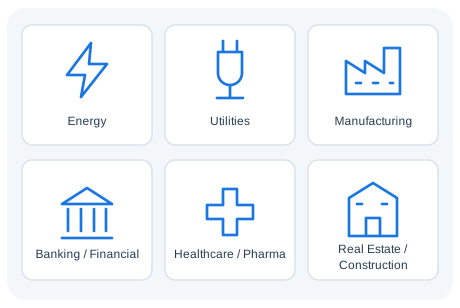
Energy
Energy organizations need business applications and information flows that connect field operations, asset performance, commercial decisions, and enterprise reporting.
Technology programs should account for distributed sites, long-lived assets, specialist systems, and the need to maintain operations while applications change. DRC’s scope brings process assessment, application planning, integration, and delivery oversight together around those needs.
Areas of focus include:
- Asset and maintenance applications, including enterprise asset management and work planning
- Integration across operational platforms, ERP, engineering information, and reporting
- Field-service workflows, mobile applications, and remote-site collaboration
- Data ownership, quality, and performance reporting for operational and business decisions
- Program governance for platform upgrades, migrations, and technology integration
- Testing, release readiness, business continuity, and user adoption
Utilities
Electric, gas, and water utilities need connected applications that support reliable service, field work, customer interactions, and asset management.
Application changes must reflect the dependencies between customer systems, network and asset records, workforce processes, and enterprise platforms. DRC’s scope focuses on defining requirements, coordinating integrations, and planning releases around operational constraints.
Areas of focus include:
- Customer information, billing, and meter-to-cash process improvement
- Enterprise asset management, work orders, and capital-project delivery
- Integration among GIS, field-service, metering, customer, and enterprise applications
- Mobile workforce tools and coordinated office-to-field workflows
- Data governance, operational dashboards, and supporting audit evidence
- Requirements, testing, deployment, training, and transition to support
Manufacturing
Manufacturing technology connects production, business systems, suppliers, and distributed operations. Changes need to account for the demands of the operating environment.
Focus technology investment on practical improvements in efficiency, visibility, and maintainability.
- Business intelligence and operational reporting
- Integration across facilities, suppliers, and vendors
- Controlled access for external partners
- Regulatory obligations and supporting controls
- Application lifecycle, updates, and patch planning
- Ongoing ownership of platforms and technology services
Banking/Financial
Financial organizations need technology oversight aligned with their operational and regulatory responsibilities.
Coordinate internal teams and external providers around service expectations, customer needs, and the availability of financial information.
Architecture and support plans should address resilience, scalability, connected business functions, and the consequences of service interruption.
- Technology risk assessment and control planning
- Secure platforms and information access
- Staff awareness and operational procedures
- Audit preparation and supporting evidence
- Business continuity and recovery planning
- Integration across financial applications and reporting
Healthcare/Pharma
Healthcare technology needs to support clinical work, protect information, and keep daily operations dependable.
DRC’s industry scope brings together IT support planning, technology oversight, and healthcare compliance considerations. Work begins with the organization’s systems, workflows, and applicable obligations.
Technology planning should account for medical equipment, specialty applications, vendors, and the people responsible for ongoing service.
Areas of focus include:
- HIPAA-related control and compliance planning
- Security risk assessment and remediation priorities
- Help-desk, onsite support, and maintenance arrangements
- Cloud platforms, hosting, and application coordination
- Network protection and access controls
- Vendor coordination and technology ownership
- Continuity planning, backup, and disaster recovery
Real Estate/Construction
Bring property operations, project teams, and business information together through connected technology.
Review the systems used for marketing, leasing, property management, accounting, and construction delivery. Consider mobile access, cloud services, and collaboration across distributed teams.
Technology decisions should reflect how people work in the office and in the field. Prioritize integration, useful reporting, and manageable change over unnecessary complexity.
- Business application selection and integration
- Cloud collaboration and mobile workflows
- Project and portfolio information
- Operational process improvement